Predictive Maintenance Platform
Preventing Equipment Failures with IoT and Machine Learning
IoT-integrated ML platform predicting equipment failures 72 hours in advance using time-series forecasting, anomaly detection, and digital twins.
Client
Industry
Services
Timeline
Team
Stack
The Challenge
A global manufacturing company with 50+ production facilities worldwide was experiencing significant losses due to unplanned equipment downtime. Their reactive maintenance approach was costing millions in lost production and emergency repairs.
Key pain points
- $15M annual losses from unplanned downtime
- Average 4-hour response time for equipment failures
- No visibility into equipment health status
- Reactive maintenance leading to premature part replacements
- Inconsistent maintenance practices across facilities
Our Solution
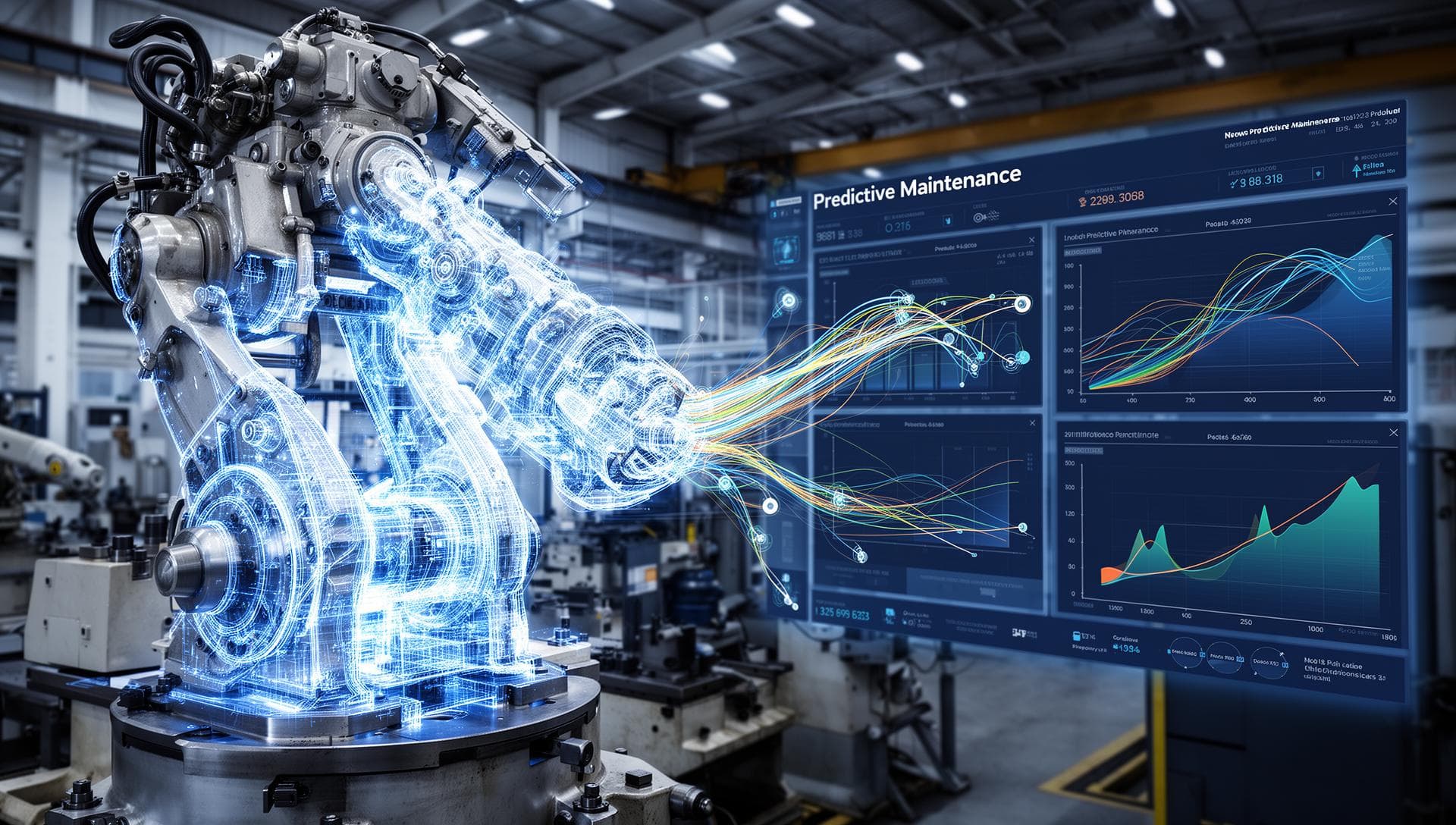
We developed a comprehensive predictive maintenance platform that combines IoT sensor data, machine learning models, and digital twin technology to predict failures before they occur.
Time-Series Forecasting
LSTM neural networks analyzing sensor data patterns to predict failures 72 hours in advance
Digital Twin Simulation
Real-time digital replicas of equipment for what-if scenario analysis and optimization
Edge Computing
On-premise edge devices for low-latency processing and offline capability
Anomaly Detection
Unsupervised learning models detecting abnormal behavior patterns in equipment
Technical Architecture
Hybrid cloud-edge architecture designed for industrial environments with strict latency requirements.
Technical highlights
Digital twin simulation, edge computing, real-time sensor fusion
Results & Impact
Maintenance Cost Reduction
Shift from reactive to predictive maintenance
Downtime Reduction
Unplanned downtime cut in half
Equipment Utilization
Improved asset productivity
Prediction Window
Average time before failure prediction
The predictive maintenance platform has transformed our operations. We're now preventing failures instead of reacting to them, saving millions in downtime costs.
VP of Operations
Global Manufacturer
What we learned
Edge computing is essential for industrial IoT applications with latency requirements
Digital twins provide valuable context for predictive models
Change management is as important as technology implementation
Next step
Have a similar problem?
Let's discuss how we can help you achieve similar results.